
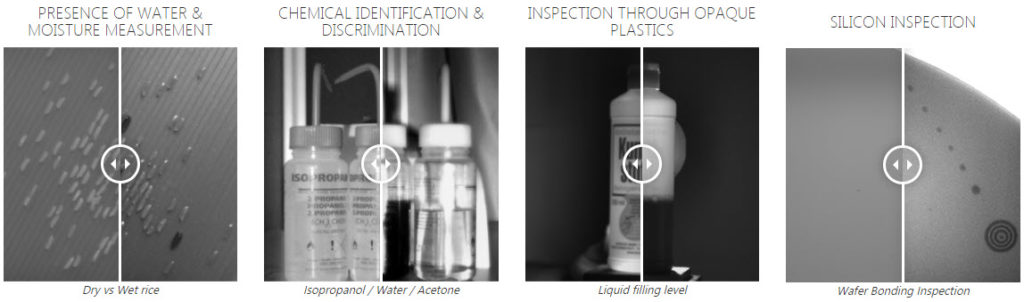
When viewing liquids, the amount of SWIR lighting absorbed or reflected is dependent on the chemical composition of the material, as seen in the image above differentiating between clear liquids.
It is often difficult to image adhesives and sealant materials when they are clear and dispensed upon a surface that may not provide sufficient contrast to make the material detectable in the acquired image. SWIR imaging and lighting may make these materials appear more prominent and detectable than when imaged with visible light, depending on their chemical makeup and how they interact with the SWIR lights.
Another benefit of SWIR lighting is that it can pass through plastic and paper packaging, making it possible to inspect liquid levels, detect content breakage, and to actually image and inspect the contents after the packaging process. This can provide enhanced final inspection of goods that may be contained in a sealed package, including medical products, food products, and pharmaceuticals.

Examples of Imaging Through Plastic Packaging
SWIR lighting will not pass through metal or metallized films or foils. For an overview of SWIR lighting, please download this document from Smart Vision Lights.
SWIR lighting is available in numerous wavelengths and, as mentioned, the choice of the wavelength is application dependent. A proper evaluation of your sample is required to determine the optimum wavelength of infrared light to use with a SWIR camera.

Typical NIR & SWIR Lighting Wavelengths
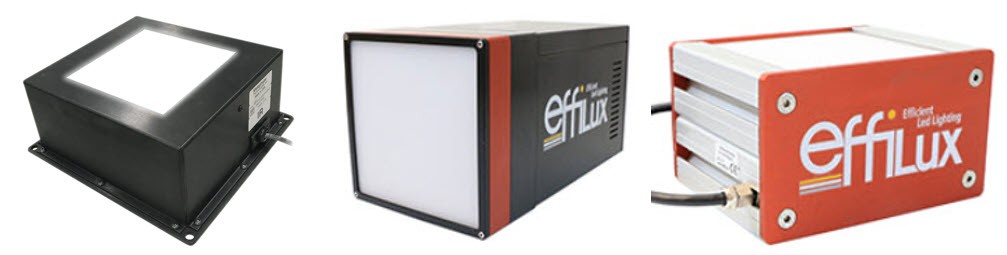
SWIR Backlights Up To 24” X 24”
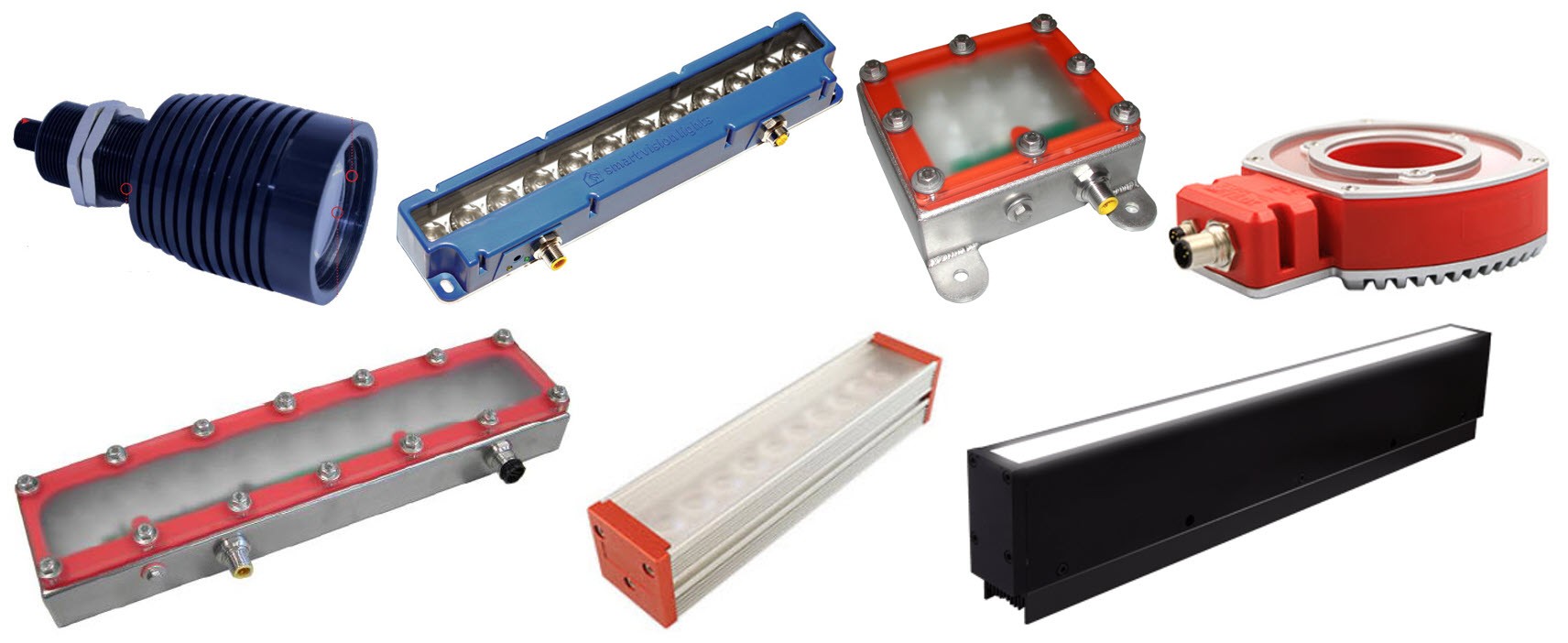
SWIR Direct Lighting is Available in a Range of Form Factors

SWIR Diffuse Dome Lights & Linear Lights


Effilux H.O.P. Technology Has its Spectral Output Peak at
the Wavelength Most Used to Detect Water

SWIR Direct Light is Available in Many Form Factors, Including for Line Scan Imaging